Eastern Coast
Punta Cana
18°36′N · 68°22′WThe Caribbean's most liquid investment market.
$80,000–$180,000
Entry (1BR)
6–9%
Gross Yield
4–7% p.a.
5yr Cap. Growth
High
Liquidity
Medium RiskFull Analysis→
Preferences
A capital and lifestyle asset that does not pretend to be a yield asset.
Casa de Campo is a 7,000-acre private resort community near La Romana, developed from the 1970s by Gulf and Western and now the longest-established luxury address in the Caribbean. It contains Teeth of the Dog — consistently ranked the finest golf course in the region — Altos de Chavón, Playa Minitas, a deep-water marina and a private airstrip alongside La Romana International.
The numbers describe an asset class rather than a market. The median villa asking price is US$3,500,000 and the median land asking price US$1,710,900, across just 38 active listings for the entire resort (DRListings, August 2026). That scarcity is the defining feature: there is no volume, no comparable-driven price discovery in the ordinary sense, and no meaningful resale pool.
It should not be underwritten on yield. Villa rental rates are high, but so are the carrying costs — resort fees, security, grounds, staff and golf membership — and occupancy on a large private villa is structurally low. What Casa de Campo has delivered for fifty years is capital preservation and use, and that is the honest basis for a purchase here.
Scarcity and permanence, not income. Thirty-eight listings across seven thousand acres is not a market in the sense the other Dominican destinations are; it is a closed community where supply is effectively fixed and demand is international and inelastic. The record since 1974 is one of value retention through every regional cycle, supported by an operator that has never allowed the product to degrade. The correct question here is not what it yields but what it costs to hold and whether the use justifies it.
A use asset with a fifty-year value-retention record, held across decades rather than traded.
Fixed supply and an international buyer pool have historically prevented the downward gapping seen in volume markets.
Teeth of the Dog and a deep-water marina are the actual product; the real estate is how you access them.
Buyers for whom the property is a family asset and a place to use, with capital preservation as the financial objective and rental income as an offset to carrying cost rather than a return. It suits multi-generational ownership and buyers already familiar with comparable communities elsewhere in the Caribbean. It suits yield-seeking investors not at all, and the analysis should say so before a deposit rather than after.
Villa rental is a real business here but a seasonal and operator-mediated one, concentrated in a handful of high-value weeks. It offsets carrying cost; it does not constitute a return. Any projection that annualises a peak-week rate across a year is describing a property that does not exist.
Family groups, golf parties, corporate retreats and event hire around Altos de Chavón
Teeth of the Dog and Dye Fore frontage; the segment that sets the resort’s price ceiling and holds value most reliably.
Trophy and capital-preservation buyers.
Larger inventory away from the golf frontage. Build quality and age vary sharply across a fifty-year estate.
Family use buyers; the segment where a survey earns its fee.
The only sub-million entry, around the marina and village. Lower carrying cost and the most rentable stock in the resort.
Entry buyers and those wanting use without villa overheads.
Median land asking price US$1,710,900. Design and construction are governed by resort standards, which lengthens and constrains any build.
Buyers commissioning a specific house who have priced the standards in.
The resort’s prime address and its most defensible pricing.
Deep-water berths, restaurants and the resort’s only apartment stock.
Oceanfront villas at the top of the market.
Elevated Chavón river views beside the artists’ village.
The resort’s largest and most varied inventory, away from frontage premiums.
Newer golf frontage inland, with the resort’s most recent construction.
A fifty-year continuous ownership and value-retention record, the longest in the Dominican Republic.
Fixed supply: 38 active listings across 7,000 acres, with no mechanism for material expansion.
Teeth of the Dog, consistently ranked the finest golf course in the Caribbean, plus two further courses.
A deep-water marina, private airstrip and La Romana International (LRM) within 10 minutes.
Comprehensive private security and estate management; the resort functions as its own jurisdiction in practice.
An international buyer pool that has historically prevented forced-sale pricing from setting comparables.
Carrying cost is the principal financial risk: resort fees, insurance, security, grounds and staffing have risen faster than regional inflation.
Yield is structurally thin to negative after costs. Any purchase underwritten on rental return is underwritten wrongly.
Illiquid on a scale of seasons rather than months — one to three selling seasons is a realistic expectation.
Build quality and age vary widely across a fifty-year estate; a survey is not optional.
Construction and renovation are governed by resort design standards, which lengthen timelines and raise costs.
Concentration risk: the value of every holding depends on a single operator continuing to maintain the product.
Median villa asking price US$3,500,000, median land asking price US$1,710,900, with every current listing above US$1,000,000 (DRListings, August 2026). Villas average roughly six bedrooms and 3,187 sq ft. Pricing is set by position — Teeth of the Dog frontage, Minitas proximity and marina berthing carry the clearest premiums — and by the quality and age of the build, which varies more than newcomers expect across a fifty-year-old estate.
Low, and structurally so. With 38 listings and an international buyer pool, a sale is a matter of matching one specific property to one specific buyer, typically over one to three selling seasons. The compensation for that illiquidity is that prices do not gap downward: the same scarcity that makes an exit slow prevents a forced-sale discount from setting the comparable for everyone else.
Self-contained and genuinely private. Three golf courses including Teeth of the Dog, a marina with deep-water berths, Playa Minitas, tennis, equestrian and shooting facilities, and Altos de Chavón — a reconstructed sixteenth-century Mediterranean village with an amphitheatre and a design school affiliated to Parsons. Security is comprehensive and the resort operates as its own jurisdiction in practice.
Supply will remain fixed. There is no mechanism by which Casa de Campo materially expands, which is the single most durable feature of the investment case and the reason a fifty-year value record exists at all.
The variable to watch is carrying cost rather than price. Resort fees, insurance and staffing have risen faster than regional inflation, and they — not the purchase price — determine whether a holding remains comfortable over a ten-year horizon.
We analyse one specific property at a time. The developer, the numbers, the title and the exit. Before you reserve, sign or transfer a deposit.
Analyse your propertyAnalyse a property here
The Caribbean's most liquid investment market.
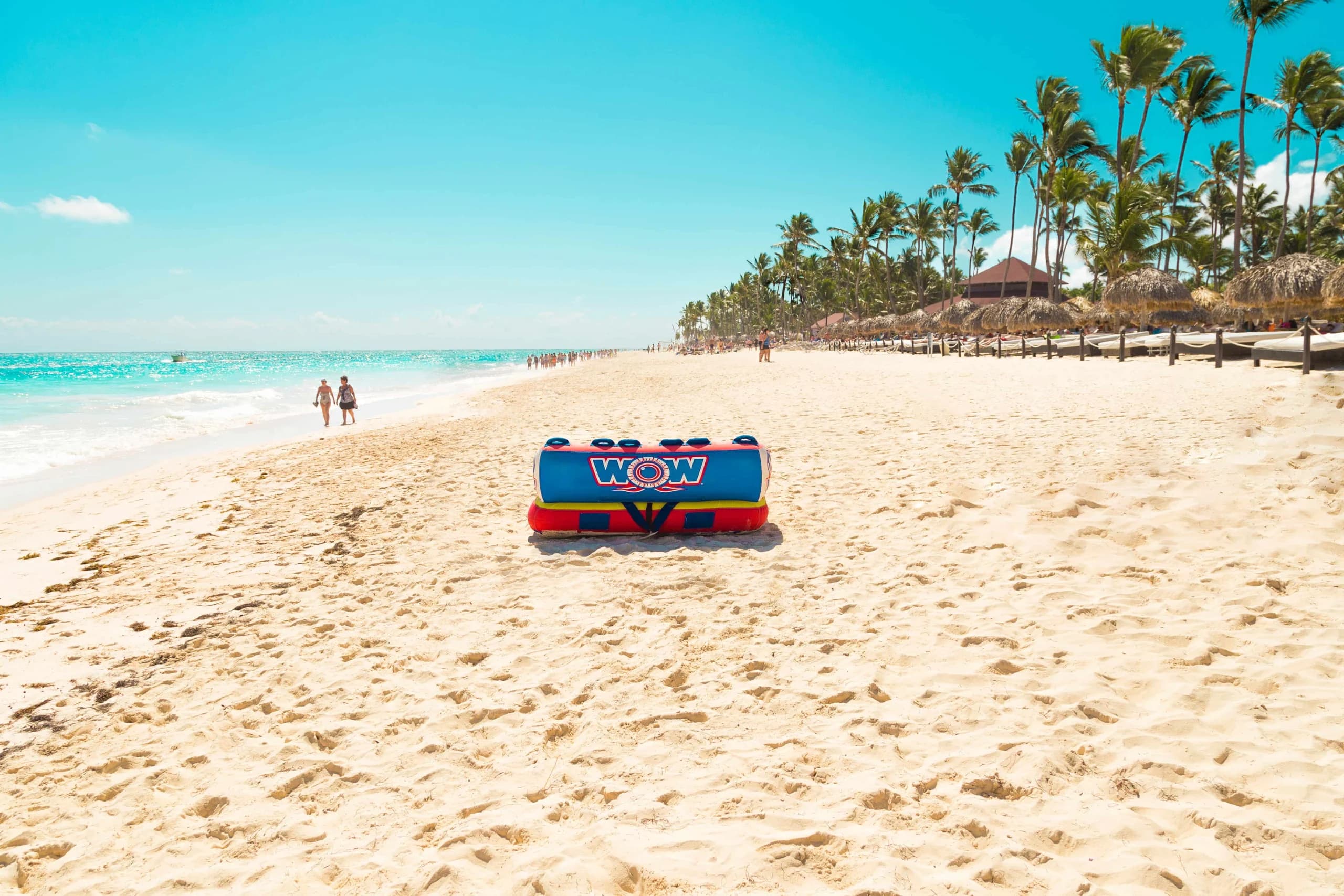
The country’s deepest rental supply — and its widest gap between advertised and achieved yield.

Ultra-luxury, supply-controlled, capital-appreciating.